
Blog Content
|
Follow us on:
|

|

|

|
|
Follow us on:
|
|
|
|
KAIZEN and the Triathlete's Edge: Why Small Steps Forge Big Wins In boardrooms and training zones alike, the myth of the “big leap” still seduces many. That one race. That breakthrough product. That magical transformation. But anyone who's ever stood on a start line, or built something lasting, knows: success isn't made in giant leaps. It's crafted in the grind of daily improvement. That’s where KAIZEN comes in.  What is KAIZEN?
KAIZEN is a Japanese philosophy meaning "continuous improvement." Not dramatic. Not flashy. Just deliberate, intentional, and compounding progress, day after day. In the corporate world, it’s behind Toyota’s world-class manufacturing. In the endurance world, it’s behind every personal best that didn’t happen overnight. KAIZEN is what gets you from: “I can’t swim 100m without gasping” to “I just negative-split a 3.8km open water swim and felt in control.” KAIZEN in Triathlon: The Daily Grind That Wins Races Triathlon doesn’t reward sporadic bursts of motivation. It rewards consistency. And KAIZEN is its secret sauce. Whether you're building aerobic base in Zone 2, mastering the high-cadence shuffle run, or finally syncing your breathing with your pedal stroke (hello, locomotor respiratory coupling), KAIZEN says: “You don’t need to be perfect today. But be a fraction better than yesterday.” If you improve by 1% every day, you will be approximately 37 times better by the end of the year. This is due to the power of compounding, where small daily improvements accumulate over time. One extra drill. One better fueling choice. One stronger mindset rep. Stack those for 12 weeks and what do you get? Momentum. Fitness. Confidence. KAIZEN for the Executive-Athlete Let’s not pretend life isn’t chaotic. As execs, we juggle QBRs, board politics, and workouts squeezed into dawn patrol hours, with social obligations and family life. KAIZEN helps here too. You don’t need to overhaul your calendar. You need 30 focused minutes. A better warm-up. A smarter recovery protocol. A refined pre-race routine. Apply the same method you’d use to improve a sales funnel or supply chain. Diagnose, tweak, test, iterate. You’re not aiming for revolution. You’re playing the long game. The Real Payoff: Identity Shift The power of KAIZEN isn’t just in race results. It’s in who you become along the way. You become someone who:
This is what our core GREAT ENDURANCE mentality is built on: Don’t forget. It is the small daily steps that turn into positive habits, patterns, and beliefs ingrained in body and mind. Enjoy the journey!” BONUS TIPS COACH GLENN:
Share this blog/newsletter with your friends, family, and colleagues who are also pursuing a sportier and healthier lifestyle!
Luck Plays a Role in Success, but don’t Bet on it. If you’ve ever watched a successful athlete, executive, or entrepreneur being interviewed, you’ve likely heard the phrase: “Honestly? I was just lucky.” It’s a humble admission, and sometimes it’s even true. But it’s also misleading. Luck exists. It can give you a head start or hit you with setbacks you never saw coming. But let’s be clear: Luck is not part of the structural formula for success. It’s an additive, not a multiplying force. And understanding this difference changes how we pursue progress in both sport and leadership. How did you get to the situation so that you recognized the opportunity, were able to leverage it and were able to take advantage of it.  The Real Formula for Success
In coaching, in business, and in life, I work from a foundational model I call the Formula of Success (TFoS): Success = Preparation × Vision × Courage + Luck These three multiply each other. If any one of them is zero, the product is zero. Without preparation, courage becomes reckless. Without vision, opportunity remains hidden. Without courage, vision is never acted on. And luck? It’s simply an add-on. Sometimes it helps. Sometimes it hinders. But it never builds the house. Why the Additive Distinction Matters This difference, additive versus multiplicative, is not just semantics. It shapes how we respond to circumstances. If you believe luck multiplies your outcomes, you overestimate its power. You might start chasing serendipity, waiting for a break, or blaming randomness when things fall apart. But if you accept that luck is merely an additive variable, you keep control. You focus on the factors you can influence - your P, V, and C - and accept that luck will show up when it does. It may help. It may hurt. But it won’t define you. In fact, the stronger your preparation, vision, and courage, the less impact luck has on your trajectory. Luck in One Aspect of Life, Does Not Equal Luck All Around. Let’s look at Steve Jobs. Many people credit his success to timing and luck - and yes, there were elements of that. He met the right people at the right moment, during a technological boom. But Jobs also experienced extraordinary bad luck. He died at just 56 from a rare and aggressive form of cancer. All the vision, courage, and preparation in the world couldn’t stop that diagnosis. That wasn’t a result of choices or strategy. It was just… unlucky. But here’s what matters: his legacy wasn’t built by luck. It was built by years of relentless preparation, bold decision-making, and a relentless drive to build products that changed how the world lives and works. His story underscores that success has to be seen in multiple ways. Don’t focus only on career or monetary objectives. Everything is important until your health or family are in danger. Try to realize that on your journey to success and see the successes you have in other fields. The Executive-Athlete Takeaway Whether you’re running a company, training for a triathlon, or navigating a major life transition, waiting for luck is a losing strategy. It may show up, but you can’t control when, how, or for whom. What you can control:
Conclusion: Luck is always present either positive or negative. You want to make sure you need it the least and maximize the effect when you get. The beauty of luck that on average you will be lucky 50% of the time. Luck is always present either positive or negative. You want to make sure you need it the least and maximize the effect when you get. The beauty of luck that on average you will be lucky 50% of the time. You might hit a stroke of bad luck now, but know that in the next phase you might get lucky. Alternatively, when you get lucky, count your blessings and prepare for potentially a some bad luck later on. Success is not a destination, but a journey. Don’t forget. It is the small daily steps that turn into positive habits, patterns, and beliefs ingrained in body and mind. Enjoy the journey! BONUS TIPS COACH GLENN:
Share this blog/newsletter with your friends, family, and colleagues who are also pursuing a sportier and healthier lifestyle!
COURAGE: The Catalyst That Ignites Success (part of TFOS) You can have the best-laid plans (Preparation) and be aware of any and all opportunities (Vision), but without Courage, they remain locked in your notebook, safe and useless. In the equation Preparation × Vision × Courage = Success, courage isn’t the cherry on top, it’s the ignition key. If C (Courage) = 0, then it all equals zero. COURAGE is the multiplier. It’s the bold move. The committed step. The trait that turns potential energy into kinetic action. In triathlon terms, it’s jumping into cold, choppy water when your brain screams “not today.” In the boardroom, it’s signing that deal, launching the new strategy, or saying no to an overpaid comfort zone.  1. Grit and Resilience: The Daily Fight
Courage shows up not in grand moments, but in the grind. Grit means choosing to get into the ring every day. It means giving that presentation, even if the last one did not go great. It means getting into the open water, even when there are waves. Resilience? That’s the comeback story. Fall down seven, get up eight. It’s not heroic. It’s habit. In sport and business, you won’t avoid setbacks. Courage is what keeps your feet moving forward even when your confidence is taking body blows. "I have not failed. I've just found 10,000 ways that won't work." - Thomas A. Edison 2. Risk-Taking and Overcoming Fear: Playing Beyond the Comfort Zone Every promotion, every race, every investment in yourself or others carries risk. Courage isn’t being fearless, it’s being willing to act despite the fear. Fear says: “What if I fail?” Courage says: “What if I don’t try and regret it forever?” Taking smart, calculated risks is essential in both sport and boardrooms. Think Ironman debuts, startup launches, or take a sabbatical to reset your life strategy. These aren't reckless. They're necessary inflection points. If you never feel fear, you’re not playing a big enough game. 3. Strategic Action: Boldness Without Blindness Courage isn’t the loudest person in the room or the first to jump. Real courage is calculated. You don’t storm the battlefield without recon. You train hard, assess risks, and then you take the leap. That’s the intersection of Preparation, Vision, and Courage. It’s not impulsive, it’s informed bravery. It is calculated decision making under uncertainty, just like management. Be bold. But be smart. 4. Emotional Intelligence: Strength with Self-Control Courage is also quiet. It's walking into conflict and leading with empathy. It’s receiving feedback without defensiveness. It’s holding the mirror up to your own leadership flaws without cracking. In high-stress situations, on the racecourse or in crisis meetings, emotional courage keeps the team together. It’s what separates explosive egos from composed commanders. Want to lead under pressure? Get comfortable being uncomfortable with yourself. 5. Accountability and Ownership: No More Excuses The courageous don’t hide behind circumstances or teams. They own the outcome, win or lose. You missed a deadline? Own it. Your athlete didn’t perform? Analyze your coaching. You bonked at kilometer 28? Learn, adapt, and move forward. Excuses are a virus. Courage is the cure. 6. COURAGE IS THE MULTIPLIER Without courage, the equation collapses. Preparation × Vision × 0 = zero. You need courage for the breakthrough, not just the blueprint. So, what does COURAGE look like today?
That’s not weakness. That’s growth. That’s movement. That’s COURAGE. Don’t forget: It is the small daily steps that turn into positive habits, patterns, and beliefs ingrained in body and mind. Enjoy the journey! BONUS TIPS COACH GLENN: The beauty about courage is that it is addictive and there is no turning back. Once you get the courage to overcome your fears, the adrenaline will keep you from falling behind ever again. You just proved to yourself that you CAN DO IT ! So next time, you can take it just one more step further. ✅ Pick one thing today that scares you and do it. ✅ Reflect on a time you acted with courage. What did it unlock? ✅ Write down one bold thing you’ve been avoiding—and take one step toward it. ✅ Ask yourself: "If I weren’t afraid, what would I do right now?" Share this blog/newsletter with your friends, family, and colleagues who are also pursuing a sportier and healthier lifestyle!
Vision: The Most Unseen Multiplier in the Formula for Success You can be perfectly prepared. You can have all the courage in the world. But if you're not looking up, if you're not aware of what’s changing around you, you’ll still miss the boat. In the formula for success {(Preparation × Vision × Courage) + Luck - Goals}, Vision is often misunderstood. It’s not just about having a goal; it’s about continuously scanning the horizon. It's the active scanning of your surroundings that makes sure your preparation and bravery are pointed in the right direction. Why Vision Matters
Vision is awareness. Not in a dreamy, abstract sense, but in the practical ability to spot opportunities, anticipate change, and respond intentionally. It’s what separates those who get stuck in their routine from those who evolve, innovate, and ultimately succeed. In Triathlon: New Margins Are Always Emerging The athlete who only trains hard without paying attention to evolving trends risks falling behind. A triathlete with high preparation and bold action may never realize that new carbon shoe tech shaved 3 minutes off others’ run times. They might mis the latest aerodynamic tweaks to cut 20W of drag or that the fueling strategies and HRV tracking have radically shifted recovery science. Vision is watching those trends, testing ideas, listening to smarter athletes, and staying curious. It’s asking, “Is there something out there that could make me better?” Even more, you can expand your vision by having active conversations with other triathletes or even better get a coach who is monitoring the latest innovations to learn and share with his athletes. In Work: Opportunity Doesn’t Wait You can be skilled. You can be brave. But you always have to keep your eyes on the market. Personally you need to keep monitoring the job market internally and externally or you might miss a golden opportunity. As a business you need to keep your eye out for emerging competitors redefining your market and new technologies which might shift your industry paradigms like AI, sustainability, or remote communication. If you are not actively looking around you may never act, because you don’t even know you should. And here’s the irony: when we’re blind to opportunity, we tend to blame luck for our lack of progress. “I was just in the wrong place at the wrong time.” No! You just weren’t looking. Vision in the workplace means watching, reading, asking questions, attending, networking. It means zooming out, not just drilling in. In Life: Vision Shapes Direction In family, health, relationships, and community, vision is about reflection. It’s noticing the early signs of burnout, of a partner needing support, of a child showing talent or distress, of a body asking for rest or movement. Don’t start doubting yourself, but keep asking yourself: Am I on the path I want to be on? Are there changes I’m not noticing because I’m too deep in the daily grind? You might be doing all the right things… but in the wrong direction. Conclusion: Look Up. Look Around. Adjust. If you’re not see(k)ing, you’re not succeeding, at least not consistently. Without vision, even the best-prepared, most courageous person risks wasting their effort. Vision connects effort to opportunity. It’s not a luxury. It’s a multiplier. So whatever phase you’re in, training, working, parenting, recovering, ask yourself regularly. “What am I not seeing right now?” It might just change your trajectory. Don’t forget. It is the small daily steps that turn into positive habits, patterns, and beliefs ingrained in body and mind. Enjoy the journey! BONUS TIPS COACH GLENN:
Share this blog with your friends, family, and colleagues who are also pursuing a sportier and healthier lifestyle!
Preparation: The Least Sexy Factor of Success Preparation is the foundation of success. It involves deliberate planning, acquiring necessary skills, and building a strong mindset. Preparation ensures you are equipped to face challenges and seize opportunities. As Benjamin Franklin famously said, “By failing to prepare, you are preparing to fail.”  Why Preparation Matters:
Preparation isn’t glamorous. It’s disciplined, steady, and relentless. It involves deliberate steps when nobody's watching. It's the research done late at night, consistent training when motivation wanes, and deliberate rehearsal of critical conversations. This quiet, persistent effort amplifies every aspect of the TFOS formula (Preparation x Vision x Courage). Without preparation, the formula equates to zero. Preparation can vary broadly or narrowly, depending on your life goals. If you aim to be an expert, it means deeply understanding your subject. This could be academic or practical. For broader success, diversifying your experiences is crucial. That is why it is important to realize your GOALS so that your preparation is effective. Don’t forget that preparation is continuous. At every step in life you need to keep preparing for the next. You are never done preparing. Success builds gradually, step-by-step, easing the pressure for quick perfection. As George Bernard Shaw noted, "Men are wise in proportion, not to their experience, but to their capacity for experience." Yet, preparation isn’t always a choice. Factors like birthplace, family, race, and gender undeniably influence our initial conditions and opportunities. It makes a difference whether you are born in rural areas of Missouri, the bush of Africa, the Amazon forest or Manhattan. (This video is a scary reminder of that privilege, what it does to you mindest and how easy it is to forget.) While these elements shape part of your journey, they don’t dictate all aspects of your success. True holistic success encompasses more than monetary. Having the VISION to remain aware of your surroundings and seeing the opportunities that come by, however small, is a critical element of the equation to break the mold and turn the status quo into a hero story. Learning from Others – Be Open-Minded: Successful individuals are eager learners, absorbing lessons beyond their own experiences. Douglas Adams humorously noted, "Human beings, who are almost unique in having the ability to learn from the experience of others, are remarkable for their apparent disinclination to do so." History offers countless insights, yet humans often neglect this wealth. George Bernard Shaw aptly observed, "If history repeats itself, and the unexpected always happens, how incapable must man be of learning from experience." Learning from Yourself – Have Courage to Fail: Trial-and-error accelerates personal growth, though it requires courage. Reflective accountability matters deeply. Dr. Robert Anthony Beddard emphasized, "When you blame others, you give up the power of change." Regular self-reflection propels personal development, aligning well with the Chinese proverb: "Be not afraid of growing slowly, be only afraid of standing still." Courage complements preparation by empowering resilience against short-term failures to achieve long-term success. Practical Tips: Staying in a State of Preparation: To maintain a consistent state of preparation, schedule regular time dedicated to learning and skill-building. Establish clear, achievable goals aligned with your broader vision. Like a decision three, make a preparation three. Start from your goal and work backwards to what you need to know and be able to do to get there. Then further break those elements down into smaller components until you get to a workable action plan today. If you have multiple goals, you might find that some preparation will be more important as they are driving multiple goals, that is where you start. Create an environment conducive to focused work, minimizing distractions and reinforcing productive habits, patterns and beliefs. Conclusion: Success hinges significantly on preparation. By embracing preparation as your silent partner, you're equipping yourself not just for success, but sustaining excellence. Don’t forget. It is the small daily steps that turn into positive habits, patterns, and beliefs ingrained in body and mind. Enjoy the journey! BONUS TIPS COACH GLENN: Once you understand that life is a series of games, not just a single one, you can dare to try more things. Learn in one phase of your wins and failures to be better at the next. You can learn more from one bold action, than ten thoughts that never happen. See success and failure as just preparation for your next phase in life. The more you prepare, the better you will get. The most prepared individuals I've worked with make preparation an integral part of their daily lives. They view preparation not as a chore but as an essential practice that differentiates great leaders from good ones. Preparation allows leaders to respond effectively to challenges, seize opportunities decisively, and continuously innovate. It’s a non-negotiable habit for sustained success. That is a habit that can be taught through endurance training. One of the key benefits of endurance training is the character building of training daily for months with only the race far in the future. It is the focus on consistent preparation, wihtout the need for quick gratification, that turns highly capable people into successful, patient and visionary leaders. I love this video by Tom Cruise on how preparation plays a role in his success: Share this blog/newsletter with your friends, family, and colleagues who are also pursuing a sportier and healthier lifestyle!
Feel It to Win It: Why RPE is Your Most Underrated Performance Tool You've got the tech: power meters, GPS watches, heart rate straps — maybe even a ring that tells you how you slept. But let’s have a real moment: if you can't feel your effort, all that data is just noise. We’re living in a golden age of metrics — but we're also dangerously close to losing the most powerful tool we’ve got: the ability to listen to our own body. Rate of Perceived Effort (RPE) is the most honest and underused performance skill in your arsenal.  Why does it Matter?
In endurance sport and in life, we’re drowning in data but starving for instinct. Executives and athletes alike are tracking everything, sleep cycles, recovery scores, training loads, stress levels. And yet, the most adaptable performers? They can call their effort by feel. No screens. No graphs. Just raw, built-in wisdom. RPE is your internal compass. It cuts through the clutter, forces you to pay attention, and gives you the ability to make smart decisions under pressure, whether that’s in a race or a business deal that’s going sideways. What Is RPE? Rate of Perceived Effort is how hard something feels. That’s it. But don’t let the simplicity fool you. It’s deadly accurate when you train it. Elite athletes use RPE as a reality check:
It’s how champions avoid overreaching, adjust mid-race, and stay in the flow state. How can you build your RPE Muscle? You don’t need to throw away your tech, but you do need to stop being a slave to it. Start simple. Layer it in. Feel the difference. Try this:
What else is it helpful for? Here’s the kicker: this goes way beyond sport. Learning to tune into your effort teaches emotional regulation. It prevents burnout. It lets you spot fatigue before it becomes a problem, whether you're training for Kona or leading a high-stakes project under pressure. Think of RPE like executive intuition. The best leaders aren’t led by spreadsheets alone, they know when to push, when to pivot, and when to pull back. Same rules apply in sport. Conclusion? Stop outsourcing your awareness. Start trusting your body again. Data is helpful, but it’s not the truth. You are! Learn to trust yourself by training your feeling based on data, so that you are not depending on it anymore. Don’t forget. It is the small daily steps that turn into positive habits, patterns, and beliefs ingrained in body and mind. Enjoy the journey! BONUS TIPS COACH GLENN: People that regularly read my blogs know I love Locomotor Respiratory Coupling (LRC) Training. A great way to train your RPE feeling is using your breathing cycles to focus on how your Perceived Effort of Breathing. If for instance you are trying to run in zone 2, you should easily be able to breathe 4 steps in and 3 steps out, if you can’t keep this rhythm because it feels to much effort, you are probably running to fast for zone 2. It is a bit more accurate than just perception. Sometimes your brain limits your understanding of what you are capable off. For instance the barrier of the 5min/km. Sometimes your mind is blocking your body. Last year, because of a faulty watch. Coach Glenn ran only on LRC 3/2 feeling and broke this mental barrier, because his watch was not there to remind him. Resulting in his fastest half marathon in a 70.3 Ironman. Share this blog/newsletter with your friends, family, and colleagues who are also pursuing a sportier and healthier lifestyle!
The Formula of Success: What Most High Performers Still Get Wrong What if success - real, fulfilling, sustainable success - wasn’t a mystery? In life, most people chase success or happiness as an objective, a single goal to have or to be, or not … In my work as a business executive, athlete, coach, and social life husband, father, son, … I’ve sat across from elite athletes, startup founders, CEOs, and high-performing professionals. Despite their vastly different domains, the conversations often revolve around the same core question of success. What if it was a mindset leading to a formula? I am introducing the Formula of Success (TFOS), which we will explore deeper in the following weeks, item per item.  The Formula
Success = ∑ (Time) ∑(Focus) (Preparation × Vision × Courage) + Luck - Goal Where:
Mind You: The Real Risks Behind Missing Factors Understanding TFOS isn’t just about knowing the elements, it’s about recognizing the dangers of imbalance. Here are the key patterns I’ve seen derail the driven:
Final Thought The Formula of Success isn’t theoretical; it’s based on life. It doesn’t guarantee a walk in the park, but it gives you a framework to make clear decisions, steady progress, and meaningful reflections, no matter what your field or ambition. It’s the system behind sustainable peak performance, but you still have to do it. Don’t forget! It is the small daily steps that turn into positive habits, patterns, and beliefs ingrained in body and mind. Enjoy the journey! BONUS TIPS COACH GLENN:
Share this blog/newsletter with your friends, family, and colleagues who are also pursuing a sportier and healthier lifestyle!
Invest in High Potentials Character Beyond Skills: The Endurance Advantage In a world defined by volatility, uncertainty, complexity, and ambiguity (VUCA), your High Potentials (HIPOs) aren’t just your future, they’re your now. Most companies know this. That’s why they funnel budgets into management training, leadership development programs, and upskilling initiatives. But here’s the truth no one wants to say out loud: that’s not enough anymore.  1. Health and Wellbeing: The Untapped ROI Driver Your HIPOs are under pressure, always increasing. They're constantly operating near max capacity. In the VUCA world, the real skill is stress resilience, not just stress management. The question is if you can build the character and mentality to deal with the extra stress. Burnout is up. Absenteeism is climbing. Studies estimate that burnout costs companies up to $190 billion annually in healthcare spending alone, with productivity loss, turnover, and disengagement stacking up more hidden costs. Yet we still act like stress is something to "push through." If you’re investing six figures in developing HIPOs, why are you leaving their health to chance? Supporting their physical and mental wellbeing isn’t a "nice-to-have", it’s a performance imperative. And when you show up for their health, they show up for your business: loyalty, engagement, and retention skyrocket. 2. The Mind-Body Business Connection Let’s stop pretending mental performance is disconnected from physical condition. A healthy mind lives in a healthy body. You want focused, high-output leaders? Then prioritize strength, endurance, sleep, recovery, breathing, mobility, nutrition, and hydration, not in silos, but as part of an integrated strategy for workplace performance. Think of it as executive conditioning. You are not just surviving the workload but thriving in it. 3. You Hire for Character. So Start Investing in It. Every HR slide deck says, “We hire for character.” So why aren’t we continuously training, nurturing and building character? Endurance sports, and all it encompasses, isn’t just about physical performance; it’s a character-building crucible. The year-long journey of consistent, personalized endurance coaching hammers in grit, discipline, emotional control, and delayed gratification. What most managers gain over 5 years of corporate grind, a HIPO can build in 1 year of endurance-based development. It’s not just health. It’s a transformation of body AND mind. 4. Psychological Breakthroughs Lead to Boardroom Brilliance
There’s something powerful about doing what you once thought was impossible. From completing a triathlon to smashing a personal best. When HIPOs succeed outside the office, breaking through unsurmountable barriers, their psychology shifts. They stop seeing limits. They start thinking in terms of “what if I can?” instead of “what if I fail?” And the day-to-day challenges “feel” relatively easier, manageable, which improves stress resilience. That mindset echoes by example across teams, presentations, negotiations, and leadership challenges. You're not just building confidence. You're creating contagious belief in what's possible. 5. Strategy Lessons from the Racecourse to the Boardroom Multi-sport endurance training is a masterclass in real-time strategy, agility, prioritization, and resilience. These aren’t just physical skills, they’re direct analogs for business:
And unlike traditional coaches, GREAT ENDURANCE coaches are former business executives. We don’t just teach the sport. We translate it into strategy and mentor your HIPOs through both. Best Case: Unleashing High Potential on All Fronts When you build HIPO health and character, you don’t just get a fitter employee, you get a more resilient leader with heightened self-awareness, strategic clarity, improved energy levels, and the grit to drive results under pressure. You also foster loyalty. HIPOs who feel invested in are more likely to stay with the company. It’s a long-term play with exponential returns. Aurelien Latour, HR Director - Employee & Labour Relations EMEA at Apple confirms "By having myself gone through this experience of the Ironman 70.3 supported by GREAT Endurance, I was able to experience the many benefits of the preparation and outcomes, but also reinforce my conviction as HR Leader that triathlon and especially long distance is a life and work ethic that elevates personal’s capabilities in a unique way!" What If You Don’t? Let’s be blunt: you’ll lose them, or break them. The HIPO's who feels unsupported? They’ll leave. The ones who don’t learn to manage stress and energy? They’ll burn out. And the pipeline you spent years building? Gone. Worse still, you’re sending the message: “We want your brain, but we don’t care about your health, your growth, or your character.” That message won’t cut it in today’s competitive talent market. What’s More Risky: Investing in Your HIPOs or Playing Wait-and-See? You already know the answer. The real risk is the cost of doing nothing. You can either proactively build future-ready leaders who are healthy, strategic, and mentally bulletproof… Or sit back, cross your fingers, and hope they don’t crack, quit, or coast. Your choice. But if you’re serious about performance, loyalty, and long-term leadership success, you might consider nurturing the next generation of resilient, high-performing leaders beyond the narrowly defined, purely job related skills. Don’t forget: It is the small daily steps that turn into positive habits, patterns, and beliefs ingrained in body and mind. Enjoy the journey! BONUS TIPS COACH GLENN:
Share this blog/newsletter with your friends, family, and colleagues who are also pursuing a sportier and healthier lifestyle!
In business, sport, and life, there are only three real levers to pull when you're in transition: Learn, Earn, and Turn. I use them every time I step into a new interim leadership role, and recently, I realized something powerful: this model doesn't just apply to companies, it applies in your personal life, too.  LEARN: The Outside-In Advantage
The first month in any new organization is like landing on a foreign planet. You don’t walk in with a hammer looking for nails. You listen, observe, and go beyond surface-level reports. You look for the hidden currents; what people aren’t saying, what gets swept under the rug or are hidden in plain sight - the forest through the trees, and where the friction lies between teams, tech, or targets. This isn’t passive. It’s active listening paired with curiosity. And guess what? The same applies to your personal growth. Whether in business or endurance sport, most of us are too close to our routines to see what’s outdated, inefficient, or just plain wrong. You need to zoom out to level up. Keep questioning what you are doing. Learn from friends, colleagues, books and online videos. Get a coach to get an outside perspective. EARN: Quick Wins Build Long-Term Trust Month two is where I shift into gear. I’m still learning, but now I’m applying it. I go after low-hanging fruit, the quick, smart, meaningful wins. Surfacing hidden truths and highlighting process inefficiencies that have grown over time, but weren't being questioned anymore as "they had always been done that way." These aren't cosmetic fixes, they’re evidence. Evidence that change is possible. Evidence that I understand the system. In a corporate setting, it might be a process improvement or cross-industry best practice. In life, it might be changing your morning routine or adjusting your swim stroke. When you implement something small that works, you start to trust the process. Consistency is key to materialize the growth. Earn your self-respect by keeping to it. Make the change ! Without that, the next step falls flat. TURN: Lead the Way Forward—Together Now comes the pivot. This is when you go from outsider to change leader. But here’s the trick: you don’t dictate the turn, you co-create it. You share the patterns you’ve seen, tie them back to people within the organization, and help them connect the dots. They need to see their own fingerprints on the new direction. You don’t just turn the wheel, you help others grip it with you. In sport, this might look like finally embracing structured training, listening to your coach, or leaving behind old habits that no longer serve you. It’s not about reinventing everything; it’s about turning towards something better, together. This is also why it is important to educate your athlete so they can see and believe why they change their habits. You can not force them as a coach, they need to be willing to join you on that journey. Why This Model Applies to YOU (Yes, You) Here’s the punchline: until recently, I didn’t see that I needed to apply this to myself. My blind spot? Assuming that personal evolution was automatic. It’s not. In an era of AI, rapid tech shifts, and aging knees (let’s be honest), we all need to continually learn, earn, and turn. The minute we stop learning, we start falling behind. The minute we stop earning trust with others, or with ourselves, we lose our edge. And if we never turn, we stay stuck in habits that no longer match our ambitions. Executive Athletes, Take Note If you're an executive triathlete reading this, the metaphor writes itself. You’ve been training for years. You know how to suffer. You’ve got the Garmin- Strava - TriDot log to prove it. But what if your plan is stale? What if your "strengths" are now your blind spots? A coach isn’t there to tear you down. They’re there to learn your rhythm, earn your trust with a few smart tweaks, and then help you turn toward your next breakthrough. That takes humility. It takes openness. And it takes a mindset that’s more about growth than ego. So ask yourself:
Because if you're not doing all three, you’re standing still. Don’t forget. It is the small daily steps that turn into positive habits, patterns, and beliefs ingrained in body and mind. Enjoy the journey! BONUS TIPS COACH GLENN:
Share this blog/newsletter with your friends, family, and colleagues who are also pursuing a sportier and healthier lifestyle!
How to Stay Lean Without Losing Your Edge Let’s face it—executive life is demanding. Meetings, deadlines, travel, and decision fatigue hit hard and fast before most people have their second coffee. But staying lean? That doesn’t require a sabbatical or a personal chef. It requires systems, not willpower. These 10 daily habits are how high-performing execs stay lean, focused, and ready for anything.  1. No Alcohol
Elite executives either cut it out completely or reserve it for rare, intentional moments. Why? Because alcohol is a triple threat: it spikes appetite, adds empty calories, and delays fat loss. Want to stay sharp and lean? Keep the champagne for the truly special deals. 2. 10,000+ Steps a Day Lean execs engineer movement into their day. Walking meetings, stairs over elevators, parking far away, walking around the office while on speaker, … these are micro-habits that add up. 10K steps isn’t a number; it’s a mindset. Your day is your gym. 3. Endurance Training is Foundational Want to build staying power? Prioritize endurance. Think early morning fasted cardio runs, bike sessions during virtual calls and webinars, or treadmill walks with a podcast. Zone 2 training is gold - low stress & high return. You’re not training to collapse on the finish line; you’re training to outlast the chaos. 4. Weightlifting is Critical for Durability Muscle is your metabolic engine and your injury insurance. Resistance training 2–3x per week builds not just strength, but resilience. No time for the gym? Knock out bodyweight exercises during the day at the office: squats, push-ups, lunges or use resistance bands and work on your core strengthening while watching TV at night. Strength isn’t vanity, it’s strategy. 5. Sleep: The Silent Performance Enhancer Lean execs treat sleep like a board meeting, with priority and purpose. Aim for 7–8 hours a night, ideally in 90-minute cycles. Quality sleep reduces cravings, boosts recovery, regulates hormones, and sharpens your mood and focus. Ignore sleep, and your performance will tank over time. 6. They Keep Themselves Honest You can’t optimize what you don’t track. Always wear your sports watch or OURA ring, weigh in regularly and log your steps. Lean execs know their numbers as if it were there body balance sheet and PNL. This isn’t about six-packs. It’s about self-leadership. What gets measured gets managed. 7. Real Food Dominates Their Plates Forget fads. The lean lifestyle is built on eggs, steak, chicken, fruit, and vegetables. Protein and fiber are the anchors. Processed food? Enjoy it—but rarely. Your taste buds can be retrained to crave clarity over convenience. If your great-grandmother wouldn’t recognize it, neither should your metabolism. 8. Breathing Excellence Powers Performance High performers don’t just manage time, they manage breath. During training, techniques like LRC (Locomotor Respiratory Coupling) enhance endurance. At work? Box breathing and nasal breathing calm stress, boost clarity, and drop cortisol. Breathe better. Lead better. 9. Embrace Discipline Motivation is fickle. Discipline is freedom. These execs don’t wait to “feel like it”—they show up regardless. They train when tired, eat clean when stressed, and follow the plan when it’s inconvenient. As Aristotle said: “You are what you repeatedly do. Excellence, therefore, is not an act but a habit.” 10. It’s Part of Their Identity This isn’t about hacks. It’s about habits embedded in who they are. Every action is a vote for the person they want to become. And when they slip? They reset, not retreat. It’s about standards—and surrounding yourself with the kind of people who raise yours. Don’t forget. It is the small daily steps that turn into positive habits, patterns, and beliefs ingrained in body and mind. Enjoy the journey! BONUS TIPS COACH GLENN:
Share this blog/newsletter with your friends, family, and colleagues who are also pursuing a sportier and healthier lifestyle! (inspired by post Dan Go) |
Coach Glenn* Founder and Head Coach GR&AT Endurance Training * Ironman Certified Coach 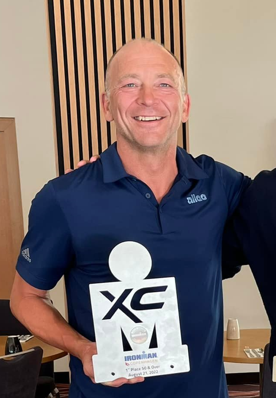
Categories
All
Archives
October 2025
|
 RSS Feed